Introduction: Integrated turnkey detailing setups accelerate facility deployment by 50% and systematically reduce five-year TCO by eliminating critical equipment downtime.
1.The High-Volume Detailing Context
The automotive aesthetic industry is experiencing a massive operational shift. As consumer demand for professional vehicle care reaches unprecedented levels, the infrastructure supporting these services must adapt. Modern investors are moving away from piecemeal purchasing and looking toward integrated facility solutions.
1.1 Defining the High-Volume Operation
A high-volume auto detailing center is a complex ecosystem. It requires precision, immense speed, and absolute reliability to function profitably.
1.1.1 Throughput and Daily Volume Metrics
The fundamental metric for success in a busy detailing center is throughput, defined as the number of vehicles successfully serviced per hour. High-volume centers often process hundreds of vehicles daily. When calculating profitability, managers focus heavily on labor utilization rates and bay turnaround times. A slight delay in one bay can cause a massive backlog, impacting the daily revenue target.
1.1.2 Traditional vs. High-Volume Production Line Mentalities
Traditional detailing relies heavily on individual technician skill, often treating each car as an isolated project. In contrast, high-volume centers operate like manufacturing assembly lines. Every task is segmented. This requires equipment that supports continuous, uninterrupted workflow rather than sporadic, customized usage.
1.2 The Fragmented Purchasing Paradigm
Historically, facility owners procured hardware one piece at a time. This approach has deep roots in the industry but presents severe limitations as a business scales.
1.2.1 The Appeal for Small-Scale Operations
For a startup, buying a single vacuum or a standalone pressure washer seems logical. It requires minimal upfront capital and allows the owner to test different brands. This flexibility is highly attractive when daily vehicle counts remain low.
1.2.2 Systemic Bottlenecks in Scaled Environments
When a facility scales to handle massive daily traffic, the fragmented hardware approach fails. Mismatched electrical requirements, conflicting plumbing standards, and uncoordinated maintenance schedules create a chaotic environment. These issues directly throttle throughput and create severe safety hazards for the staff.
1.3 The Turnkey Workshop Package Revolution
To combat systemic failures, industry leaders have developed comprehensive delivery models. The complete workshop output package has emerged as the definitive standard for ambitious operators.
1.3.1 Core Components of a Complete Solution
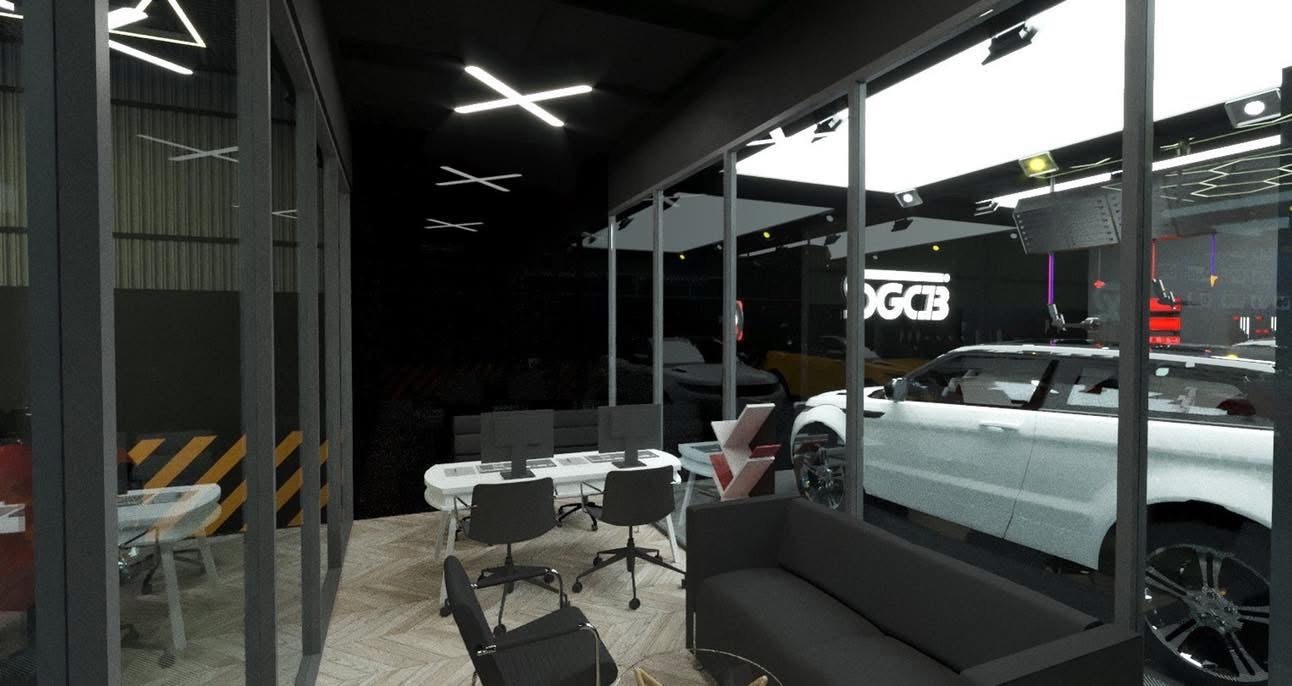
A turnkey package is not merely a bulk equipment order. It encompasses the entire facility architecture. This includes strategic floor plan design, integrated plumbing and electrical grids, standardized hardware arrays, and dedicated staff training protocols. The objective is to deliver a fully functional, highly optimized production environment from day one.
2.Conceptual Framework: From Fragmented Purchases to Integrated Systems
To understand the superiority of turnkey packages, one must analyze the detailing bay through an industrial lens.
2.1 The Detailing Bay as an Integrated Production Line
A modern detailing facility is a high-speed production line where vehicles are the raw materials and pristine aesthetics are the final product.
2.1.1 Spacial Synergy and Workflow Fluidity
Multiple technicians must operate simultaneously without impeding each other. The placement of air hoses, water reels, and chemical dispensers must follow a strict ergonomic logic. If a technician has to walk ten extra steps to retrieve a tool, that wasted time compounds over hundreds of vehicles, destroying the profit margin.
2.1.2 The Principle of System Integration
System integration dictates that the whole must be greater than the sum of its parts. An incredibly powerful pressure washer is useless if the facility water pump cannot supply adequate flow. Turnkey solutions ensure that every component is perfectly calibrated to support the rest of the network.
2.2 The Downfalls of Piecemeal Equipment Sourcing
Purchasing equipment from a dozen different vendors introduces massive structural flaws into the business model.
2.2.1 Incompatibility and Interface Clashes
Different manufacturers utilize varying thread sizes for hoses, different voltage requirements for motors, and proprietary mounting brackets. Forcing these disparate components to work together requires dangerous electrical modifications and unstable plumbing adapters.
2.2.2 The Chaos of Dispersed Maintenance Accountability
When a custom-built system fails, the blame game begins. The pump manufacturer blames the local electrician, while the electrician blames the hose supplier. This lack of centralized accountability results in prolonged facility downtime.
2.3 The Comprehensive Advantage of Package Deals
Integrated workshop packages eliminate the friction of incompatible hardware.
2.3.1 Holistic Design Beyond Basic Hardware
Premium solution providers design the hidden infrastructure before selecting the visible tools. They engineer the drainage slopes, the power distribution panels, and the compressed air networks. This holistic approach ensures absolute stability under heavy daily use.
2.3.2 Guaranteeing Long-Term Operational Reliability
By utilizing a single standard for all fittings and connections, turnkey packages make daily operations incredibly smooth. Technicians do not have to guess which adapter fits which tool, drastically reducing equipment wear and tear.
3.Operational Efficiency in High-Volume Workshops
Speed without quality is worthless, but quality without speed leads to bankruptcy. Efficiency is the paramount goal.
3.1 Maximum Throughput as the Ultimate Metric
Financial success in the car wash industry is entirely dependent on vehicle processing velocity.
3.1.1 Financial Impact of Vehicle Processing Speed
Fixed costs like rent and insurance remain static. Therefore, increasing the number of vehicles processed per hour directly inflates the profit margin. Efficient equipment setups minimize labor costs per vehicle.
3.1.2 Identifying Hidden Friction Points
Friction points are moments where workflow stops. This includes waiting for water pressure to build, untangling cords, or searching for the correct chemical bottle. These micro-delays are the silent killers of operational efficiency.
3.2 Workflow Interruptions in Fragmented Setups
Self-assembled shops are breeding grounds for workflow friction.
3.2.1 Poor Routing and the Bottleneck Effect
When hardware is placed arbitrarily, technicians end up crossing paths, dragging dirty hoses over clean vehicles, and waiting in line to use a single specialized tool. This creates a severe bottleneck effect.
3.2.2 The Weakest Link Phenomenon
A fragmented shop is only as fast as its slowest piece of equipment. Investing in a high-speed polishing array means nothing if the extraction vacuums take twice as long to clean the carpets.
3.3 Eradicating Friction Through Unified Design
Turnkey solutions are engineered specifically to eliminate workflow interruptions.
3.3.1 Streamlining Physical Movements
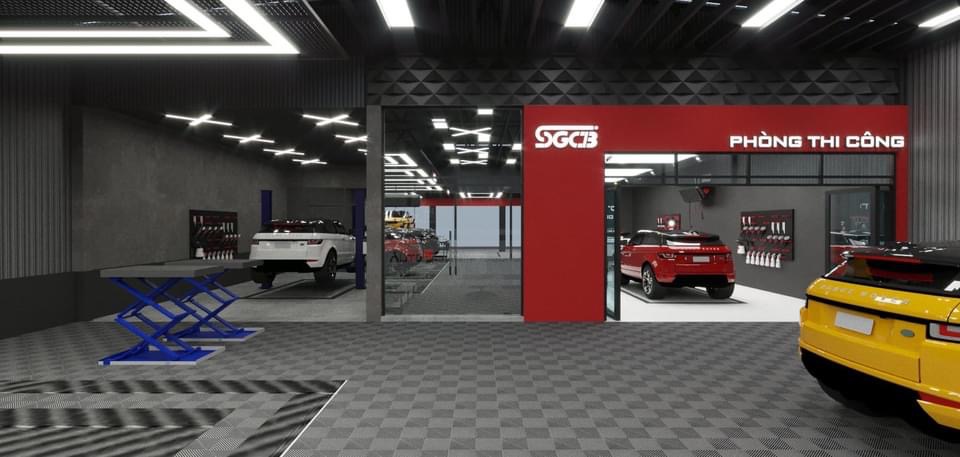
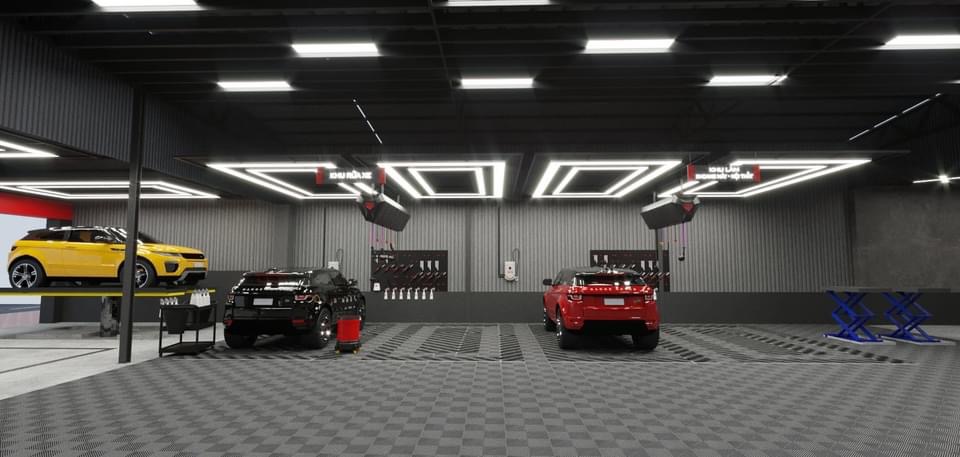
In a packaged setup, overhead booms keep hoses off the ground. Chemical dilution stations are integrated directly into the washing bays. Technicians can complete an entire exterior wash without ever taking their feet off the designated work mat.
3.3.2 Ensuring Predictable Cycle Times
Standardized equipment ensures that a basic wash takes exactly twelve minutes, every single time. This predictability allows management to schedule appointments accurately and maximize daily bookings without risking customer delays.
4.Cost Structures and Total Cost of Ownership
Evaluating equipment based solely on the sticker price is a fatal administrative error.
4.1 Exposing the Hidden Costs of Detailing Hardware
The initial invoice is merely the beginning of the financial commitment.
4.1.1 Non-Standard Installation Expenses
When integrating random equipment, owners must hire specialized contractors to modify the building. Custom electrical panels and complex plumbing manifolds cost thousands of dollars and often delay the grand opening by weeks.
4.1.2 The Financial Bleed of Trial and Error
Fragmented setups require extensive testing. When parts fail during the first week of operation, the facility must shut down. The loss of early momentum and customer trust represents a massive financial bleed.
4.2 The Maintenance Quagmire of Mixed Brands
Keeping a facility running requires a consistent supply of replacement parts.
4.2.1 Fragmented Parts Inventory
A shop with five different brands of polishers must stock five different types of carbon brushes and backing plates. This ties up operating capital in dead inventory and creates administrative nightmares for the supply manager.
4.2.2 Revenue Loss During Unplanned Downtime
If a proprietary pump fails and the manufacturer is located overseas, the wash bay might be closed for a month. In a high-volume scenario, a closed bay translates to thousands of dollars in lost daily revenue.
4.3 Economies of Scale in Turnkey Procurement
Opting for a complete package fundamentally alters the financial trajectory of the business.
4.3.1 Marginal Cost Reductions in Unified Deployments
Suppliers offer massive discounts when an operator purchases an entire facility package. Furthermore, installation is handled by a single dedicated team, slashing labor costs and expediting the launch date.
4.3.2 Diluting Ongoing Service Expenditures
With a unified hardware ecosystem, preventative maintenance becomes highly efficient. A single technician can service the entire shop using a standardized toolkit, dramatically diluting the monthly service expenditures.
4.4 A Five-Year Total Cost of Ownership Evaluation
To truly grasp the financial reality, operators must project costs over a five-year timeline.
4.4.1 Quantitative Comparison Matrix
Below is a weighted metric analysis comparing the two procurement models.
|
Evaluation Metric
|
Importance Weight
|
Fragmented Sourcing Model
|
Turnkey Integrated Package
|
|
Initial Capital Expenditure
|
20%
|
Visually Lower
|
Moderately Higher
|
|
Installation and Modification
|
15%
|
Highly Unpredictable
|
Fixed Price, Zero Surprises
|
|
Five-Year Maintenance Burden
|
25%
|
Extremely High
|
Streamlined and Predictable
|
|
Revenue Lost to Downtime
|
40%
|
Severe Risk Exposure
|
Negligible Risk
|
4.4.2 Strategic Financial Takeaways
While the fragmented approach appears cheaper on day one, the total cost of ownership over five years is astronomically higher due to maintenance chaos and operational downtime.
5.Standardization, Training, and Quality Consistency
A brand is defined by its ability to deliver the exact same result, regardless of which technician performs the service.
5.1 The Role of Standard Operating Procedures
Strict operational guidelines are the backbone of any successful service franchise.
5.1.1 Locking in Service Quality
Standard Operating Procedures dictate the exact motions, chemicals, and tools required for every task. This removes guesswork and guarantees that the customer receives flawless paint correction and interior detailing every time.
5.1.2 Controlling Variability in Multi-Shift Scenarios
High-volume shops run multiple shifts. If the evening shift uses different techniques than the morning shift, quality control becomes impossible. Standardized equipment forces every shift to operate identically.
5.2 Training Hurdles with Mismatched Tools
Training new staff on a patchwork of different tools is a logistical nightmare.
5.2.1 The Steep Learning Curve
If every wash bay features a different brand of foam cannon with unique pressure sensitivities, new hires will make frequent mistakes. This steep learning curve leads to damaged vehicle paint and wasted chemical supplies.
5.2.2 Indirect Costs of Staff Turnover
The automotive service industry faces high turnover rates. If training a new employee takes three weeks because the equipment is overly complicated, the business suffers massive indirect financial losses.
5.3 Facilitating Skill Transfer via Integrated Packages
Turnkey setups simplify the educational process.
5.3.1 The Value of Unified Training Manuals
When the entire facility uses the same hardware series, management can produce highly effective video tutorials and printed manuals. An employee trained on Bay A can immediately operate Bay B with zero friction.
5.3.2 Cross-Station Flexibility
Unified systems allow managers to move staff dynamically based on immediate traffic flow, knowing that the employee is already perfectly familiar with the tools at the new station.
5.4 Shaping Brand Perception
Customers judge a facility with their eyes before the work even begins.
5.4.1 Managing Client Expectations
Consistency builds trust. When high-end clients see a meticulously organized facility with matching equipment, they subconsciously associate that visual harmony with premium service quality.
5.4.2 Professional Aesthetics as a Selling Point
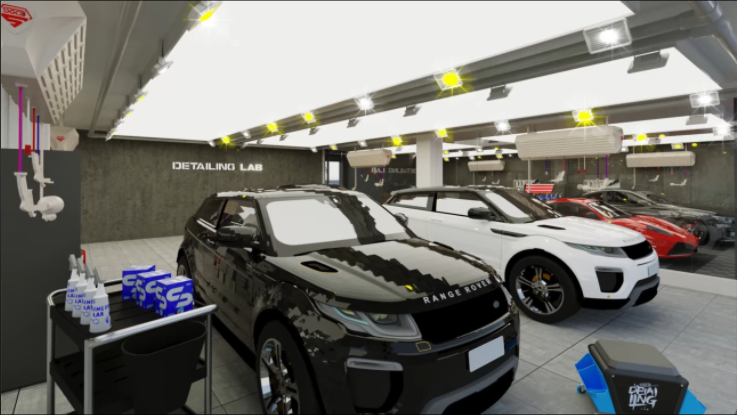
A turnkey workshop looks like an advanced laboratory rather than a dusty garage. This highly professional aesthetic allows operators to command premium pricing for their detailing packages.
6.Risk Management: Technical, Regulatory, and Safety Considerations
Mitigating physical and legal risks is a daily mandate for facility operators.
6.1 Technical Integration Risks
Mixing and matching industrial equipment invites disaster.
6.1.1 Electrical Overloads and Plumbing Failures
Attaching heavy-duty industrial vacuums to standard commercial wiring leads to blown breakers and potential electrical fires. Similarly, improperly matched water lines will burst under sustained pressure.
6.1.2 The Accountability Vacuum
When a fire or flood occurs in a fragmented shop, the operator is left entirely liable. Insurance companies may deny claims if they find that equipment was modified against manufacturer specifications.
6.2 Safety and Compliance in High-Traffic Zones
Local governments strictly regulate commercial vehicle washing operations.
6.2.1 Mitigating Water and Electrical Hazards
Combining high-voltage polishers with uncontrolled water spray is deadly. Turnkey solutions utilize specialized waterproof enclosures and elevated cable management systems to eliminate electrocution risks.
6.2.2 Navigating Environmental Waste Regulations
Municipalities require advanced wastewater capture and chemical filtration systems. Piecemeal shops often fail municipal inspections, whereas turnkey packages come pre-engineered to meet stringent environmental compliance standards.
6.3 Centralizing Responsibility Through Packages
The smartest risk management strategy is delegating liability.
6.3.1 Single Point of Contact Advantages
If an inspection fails, the facility owner simply contacts the turnkey provider. The provider is contractually obligated to rectify the engineering flaw, shielding the operator from technical headaches.
6.3.2 Minimizing Regulatory Exposure
Using certified, factory-tested integrated systems drastically reduces the likelihood of facing crippling municipal fines or unexpected operational shutdowns.
6.4 Business Continuity and Resilience
A robust business must survive unexpected equipment failures.
6.4.1 Establishing Rapid Emergency Protocols
Turnkey providers offer 24-hour technical support and rapid-response replacement protocols. If a primary compressor fails, a compatible backup can be deployed immediately.
6.4.2 Securing the Parts Supply Chain
Partnering with a major systemic supplier guarantees access to crucial replacement parts for decades, protecting the facility against global supply chain shortages.
7.Scalability and Multi-Site Replication
For visionary entrepreneurs, the first facility is merely a prototype for a national franchise.
7.1 Mapping the Growth of Detailing Franchises
Scaling a service business requires exact replication.
7.1.1 Network Effects and Valuation
Corporate valuation skyrockets when a brand demonstrates the ability to open new locations quickly and profitably. Investors look for highly standardized operational models.
7.1.2 The Dilemma of Quality Dilution
The greatest threat to a expanding franchise is quality dilution. If the third location offers an inferior wash compared to the flagship store, the entire brand reputation shatters.
7.2 Scaling Roadblocks in Fragmented Setups
You cannot franchise chaos.
7.2.1 Exponential Management Complexity
If a brand has ten locations, and each location has entirely different equipment, the corporate headquarters must manage ten different maintenance schedules, ten different training manuals, and ten different chemical supply lines.
7.2.2 Fragmented Regional Experiences
Inconsistent hardware inevitably leads to inconsistent customer experiences, destroying the core premise of brand loyalty.
7.3 Utilizing Complete Packages as Expansion Blueprints
Turnkey packages act as literal copy-and-paste templates for rapid expansion.
7.3.1 Modular Footprint Adaptability
Whether leasing a small urban garage or a massive suburban warehouse, the turnkey blueprint can be mathematically scaled up or down while maintaining the exact same operational logic.
7.3.2 Slashing Deployment Timelines
Because all engineering and equipment selection is already finalized, a new franchise location can be built and launched in half the time it takes to build a custom shop.
7.4 Data Benchmarking and Continuous Refinement
Standardization unlocks the power of corporate analytics.
7.4.1 Cross-Location KPI Tracking
When every facility uses identical equipment, corporate managers can accurately compare water usage, electricity costs, and labor efficiency across the entire network to identify underperforming locations.
7.4.2 Data-Driven Process Evolution
With uniform data, the company can refine its standard operating procedures globally. A slight efficiency improvement discovered in one shop can be immediately rolled out to the entire franchise network.
8.Decision-Making Framework for High-Volume Operators
Transitioning to an integrated package requires careful strategic planning.
8.1 Crucial Evaluation Metrics for Operators
Before signing a procurement contract, leadership must assess their actual needs.
8.1.1 Forecasting Traffic and Downtime Tolerance
Operators must calculate their projected daily vehicle counts. If the business model collapses after three hours of equipment downtime, a turnkey package is an absolute necessity.
8.1.2 Assessing Team Bandwidth
Does the internal team possess the engineering background required to design complex electrical grids? If not, attempting a custom build is financially reckless.
8.2 The Turnkey vs. Custom Checklist
Management should utilize the following criteria to evaluate their readiness:
- Evaluate local environmental compliance strictness.
- Assess internal capability for complex technical training.
- Determine the availability of specialized maintenance contractors in the region.
- Clarify the five-year multi-site expansion goals.
- Calculate the exact financial penalty for a single day of total facility closure.
8.3 When Single-Item Sourcing Remains Viable
Despite the overwhelming advantages of integrated systems, narrow exceptions exist.
8.3.1 The Boutique Artisan Shop
For single-bay operations focusing entirely on multi-day concours-level restorations, massive throughput is irrelevant. These artisans may genuinely benefit from hand-selecting niche, highly specific orbital polishers.
8.3.2 Budget-Constrained Startups
Mobile detailers or operators with strictly limited startup capital must rely on basic, single-item purchases to enter the market.
8.4 Final Strategic Directives
For facilities aiming for market dominance, the path is clear.
8.4.1 Prerequisites for System Implementations
When a facility expects high daily volume, employs multiple rotating shifts, and targets premium clientele, implementing a complete workshop output package is the only logical decision.
8.4.2 Adopting a Long-Term Capital Vision
Operators must abandon the fixation on initial sticker prices. Embracing a long-term total cost of ownership perspective will secure the operational stability required to dominate the regional detailing market.
9.Frequently Asked Questions
Question: Can I integrate a turnkey package into an existing facility without tearing down the walls?
Answer: Yes. Premium solution providers specialize in retrofitting. They perform detailed site audits to adapt their standardized plumbing and electrical modules to fit within pre-existing architectural constraints, minimizing heavy demolition.
Question: Will adopting a complete workshop output package force me to use specific, overpriced chemical brands?
Answer: Not necessarily. While turnkey providers offer chemically optimized soaps and sealants designed to protect their internal pump mechanisms, most modern systems feature adjustable dilution modules that accommodate a wide variety of third-party, pH-neutral detailing fluids.
Question: How long does the installation of a comprehensive turnkey system typically take compared to a custom build?
Answer: Because the engineering, load balancing, and custom fabrication are completed off-site before delivery, the actual installation phase is drastically reduced. A fully integrated system can often be deployed and calibrated within two weeks, whereas piecemeal custom builds regularly suffer from months of contractor delays.
10.Conclusion: Towards System-Level Thinking in Detailing Workshop Design
The automotive detailing landscape has permanently evolved. The era of haphazardly assembled workshops is ending.
10.1 Reviewing the Core Drivers of Change
The migration toward turnkey packages is driven by an unyielding demand for operational efficiency, stringent cost predictability, rigorous risk mitigation, and seamless franchise scalability. Facility operators recognize that systemic harmony generates superior profit margins.
10.2 Impacts on Global Supply Chains
This paradigm shift is forcing traditional hardware manufacturers to adapt. Companies that previously only sold hoses or brushes are now partnering with engineering firms to offer holistic, integrated facility solutions.
10.3 Metrics for Future Industry Research
Future analysis within the sector must focus on tracking the exact depreciation curves of integrated systems versus fragmented setups, providing definitive quantitative proof of the long-term supremacy of the turnkey detailing model.

References
- Industry Savant. Beyond Surface Shine: How High Volume Detailing Shops Maximize Efficiency. Available at: https://www.industrysavant.com/2026/04/beyond-surface-shine-how-high.html
- SGCB Auto Care. Turnkey Auto Detailing Workshop Solutions - Complete Equipment Supply. Available at: https://sgcbautocare.com/pages/turnkey-auto-detailing-workshop-solutions-complete-equipment-supply
- Stainout System. The Ultimate Guide to Selecting the Best Auto Detailing Equipment. Available at: https://www.stainoutsystem.com/blog
- Auto Training Centre. Caring for Cars: Auto Detailing Equipment Found in Every Shop. Available at: https://www.autotrainingcentre.com/blog/caring-cars-auto-detailing-equipment-shop/
- Slim Fit Skid Mount Auto Detailing Equipment for Mobile Car Detailing. Available at: https://rightlook.com/slim-fit-skid-mount-auto-detailing-equipment-for-mobile-car-detailing/
- How to Start a Car Wash Business in 2026: Complete Guide. Available at: https://lovable.dev/guides/how-to-start-car-wash-business-complete-guide
- Blog - SimplSourcing Sourcing Strategies. Available at: https://simplsourcing.com/blog
- How to start a car washing business from the ground up. Available at: https://www.jim.com/blog/how-to-start-a-car-washing-business
- The Mobile Buff. Top 7 Yuba City Auto Detailing Shops & Mobile Services for 2026. Available at: https://www.themobilebuff.com/blog/yuba-city-auto-detailing
- Detail World LLC. Blog - Detail World, LLC. Available at: https://detailworldllc.com/blog/
- Smart Lion Auto Detailing SEO. Website Development Services for Auto Detailers. Available at: https://liondetailingseo.com/website-development-services/


