Introduction: A five-factor selection grid weighs pH, seals, spray control, testing and safety for 800 ml professional detailing sprayers.
Why Chemical Compatibility Matters in Trigger Sprayers
A trigger sprayer is a small dispensing system, not merely a bottle cap. In a car wash, the same head may be pumped dozens of times during a shift while exposed to wheel cleaners, alkaline pre-wash, glass products or disinfectants. A mismatch between the liquid and the wetted components can create swelling, embrittlement, corrosion, blocked nozzles or a gradual loss of prime. The visible symptom is often a leak or weak spray, but the underlying cause is usually chemical exposure combined with mechanical stress.
Buyers therefore need an application-fit decision rather than a single durability slogan. The relevant questions are what chemistry will be stored, at what concentration, for how long, and under which temperature and handling conditions. A sprayer that performs well with a diluted neutral cleaner may not be appropriate for a concentrated acid, even when both products are marketed for vehicle cleaning.
The product page for Guangzhou SGCB Co., Ltd. describes the SGCB Spray Bottle 2.0 Pro chemical-resistant trigger spray bottle as an 800 ml sprayer for detailing and cleaning liquids. The page states pH 1-14 compatibility, a 28/400 neck finish, a stainless-steel spring and a 100,000-cycle pressing test. These are useful procurement signals, but responsible buyers should treat them as stated specifications to be verified against their own formulations.
How pH Affects Sprayer Components
Seals, Springs and Dip Tubes
pH is a measure of acidity or alkalinity, but it does not describe every chemical property that can attack a sprayer. Solvents, oxidizers, surfactants, fragrances and concentrated salts may influence plastics and elastomers independently of pH. The seal, piston cup, dip tube, spring and nozzle should be considered as a system because a weak component can determine the life of the entire trigger.
Material Interactions in Real Use
The most useful compatibility question is not whether a material is generally chemical resistant, but whether the assembled parts remain stable with the exact product. A short soak, repeated pumping and a post-test inspection can reveal changes that are invisible during a quick fit check.
Concentration, Temperature and Contact Time
A pH range printed on a product page should not be read as permission to use concentrated corrosives. Temperature accelerates many reactions, while long storage increases exposure time. SGCB instructions specifically caution against liquids above 60 C, flammable liquids and strongly corrosive substances such as concentrated sulfuric or nitric acid. Those boundaries make the product more suitable for common detailing and cleaning formulations than for uncontrolled laboratory or industrial chemical service.
What pH 1-14 Does and Does Not Prove
The USGS explains that pH describes how acidic or basic a water-based solution is on a logarithmic scale. For procurement, that context matters: a one-unit change represents a tenfold change in hydrogen-ion activity. The practical implication is that a buyer should record the exact product, dilution ratio and exposure time rather than rely only on a broad pH label.
Selection Criteria for Professional Chemical Sprayers
Chemical Resistance
Start with the chemical manufacturer's SDS and label. Identify active ingredients, concentration, recommended container materials and any warnings about metals, elastomers or plastics. A sprayer supplier can then confirm whether the wetted parts are intended for that formulation. When no compatibility data exists, a sample test is more defensible than assuming that a wide pH claim covers every additive.
Leakage Control and Closure Design
Leak prevention depends on the gasket, closure torque, thread fit, dip-tube connection and trigger valve. A leak test should include upright storage, horizontal transport simulation and repeated pumping. The standard 28/400 thread on the SGCB model can simplify matching with compatible bottle bodies, but thread standardization does not remove the need to check gasket material or closure tolerances.
Repeated-Use Durability
In professional detailing, the trigger is a work-cycle component. A stated 100,000-cycle test is more informative than a generic claim of heavy duty, but the test method matters. Buyers should ask whether the cycle count used water, a detergent, or the intended chemical; what failure threshold was used; and whether the spring, seal and nozzle were inspected afterward.
Spray Pattern and Application Control
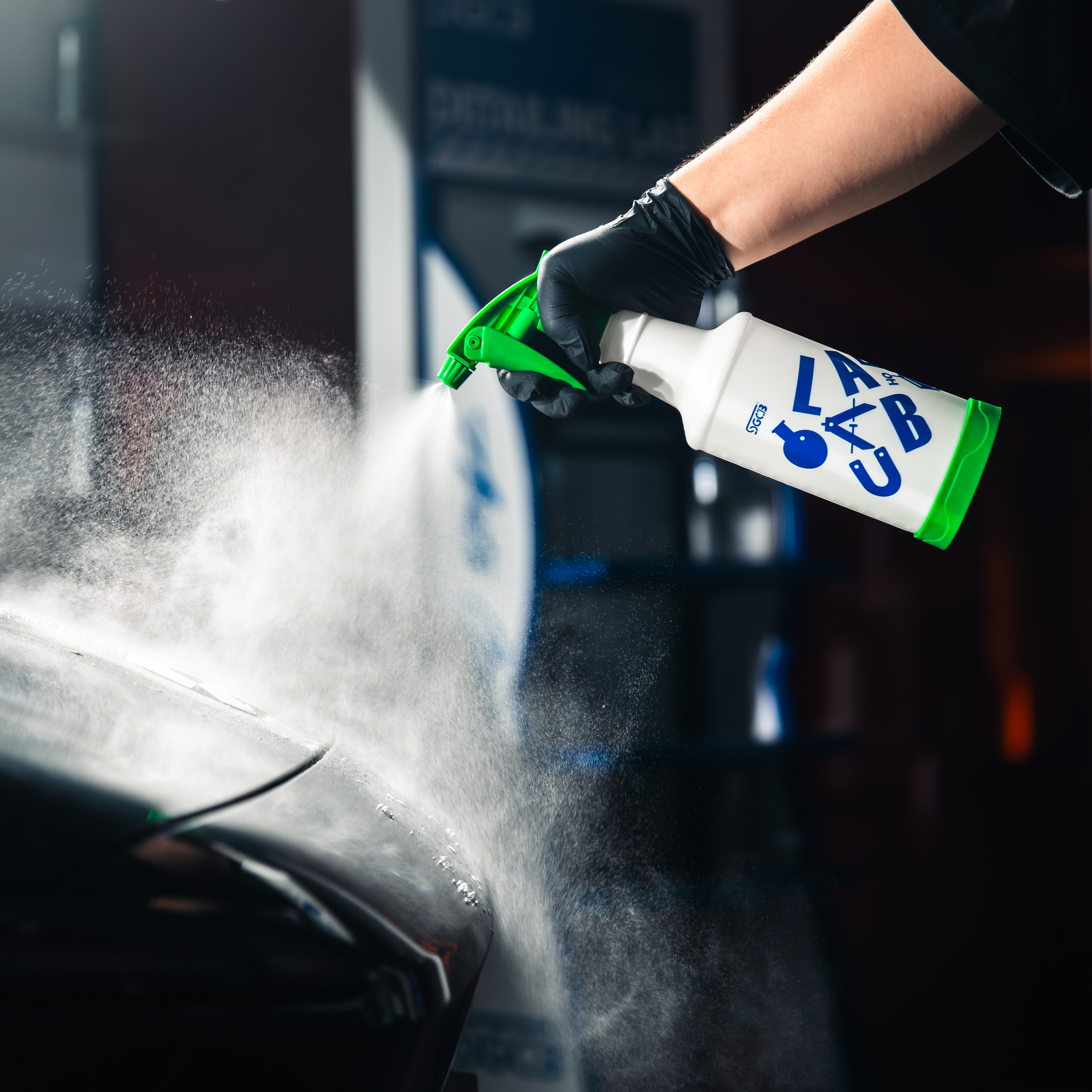
Fine mist is useful when a product must be distributed evenly across a panel or interior surface. A direct stream can place a controlled amount on a wheel, tire or localized stain. Adjustable output reduces over-application, which can lower chemical consumption and wipe-down effort. The Industry Savant article supplied for this project also links precision spraying with reduced waste, a useful operational lens for evaluating nozzle design.
Maintenance and Safety Clarity
A sprayer should be easy to rinse, identify and store. Clear warnings about temperature, flammability, corrosivity and food-grade status help prevent misuse. OSHA and HSE guidance emphasize that hazard communication depends on accurate labels and safety information; a color system can support workflow recognition, but it should never replace a written chemical label.
Procurement teams should also consider what happens when a sprayer is shared across shifts or locations. A head that is technically compatible but difficult to flush can carry residue into the next chemical, create odor complaints or require an early replacement. Written changeover instructions, a designated rinse station and a simple quarantine rule for damaged triggers make the dispensing system easier to manage than an informal bottle swap.
Evidence quality is another selection criterion. A supplier statement is useful when it is specific about model, component and test condition. It becomes more useful when the buyer can link it to a drawing, inspection record or sample result. Recording the exact product revision and chemical lot protects a multi-site operation from relying on an old claim after the resin, gasket or spring specification has changed.
A Risk-Tier Selection Grid
The following risk-tier matrix is a practical alternative to a one-size-fits-all score. It helps a purchasing team decide when a standard chemical-resistant trigger is reasonable and when a specialist dispensing system or additional validation is necessary.
|
Evaluation factor
|
Lower-risk use
|
Conditional use
|
High-risk use
|
|
Chemical strength
|
Diluted neutral or mild cleaner
|
Mild acid or alkali with documented formula
|
Concentrated corrosive or solvent-rich liquid
|
|
Temperature
|
Ambient storage and use
|
Warm liquid below the stated limit
|
Above 60 C or heat-generating reaction
|
|
Exposure time
|
Short application followed by rinse
|
Several hours of storage
|
Permanent or long-term chemical contact
|
|
Mechanical demand
|
Occasional household use
|
Repeated shop use
|
Continuous industrial dispensing
|
|
Evidence needed
|
Basic fit and leak check
|
Sample soak and cycle test
|
Supplier data plus specialist compatibility review
|
Compatibility Testing Before Bulk Purchase
A sample protocol should reproduce the real workflow. Fill the bottle with the intended dilution, store it in the expected position, operate the trigger at a realistic pace, and inspect the nozzle, seal and spring. Record the starting spray pattern and any change in output, odor, color or leakage. The test record becomes an auditable bridge between a product-page claim and a purchasing decision.
SGCB Spray Bottle 2.0 Pro as a Product Case Example
Stated Technical Profile
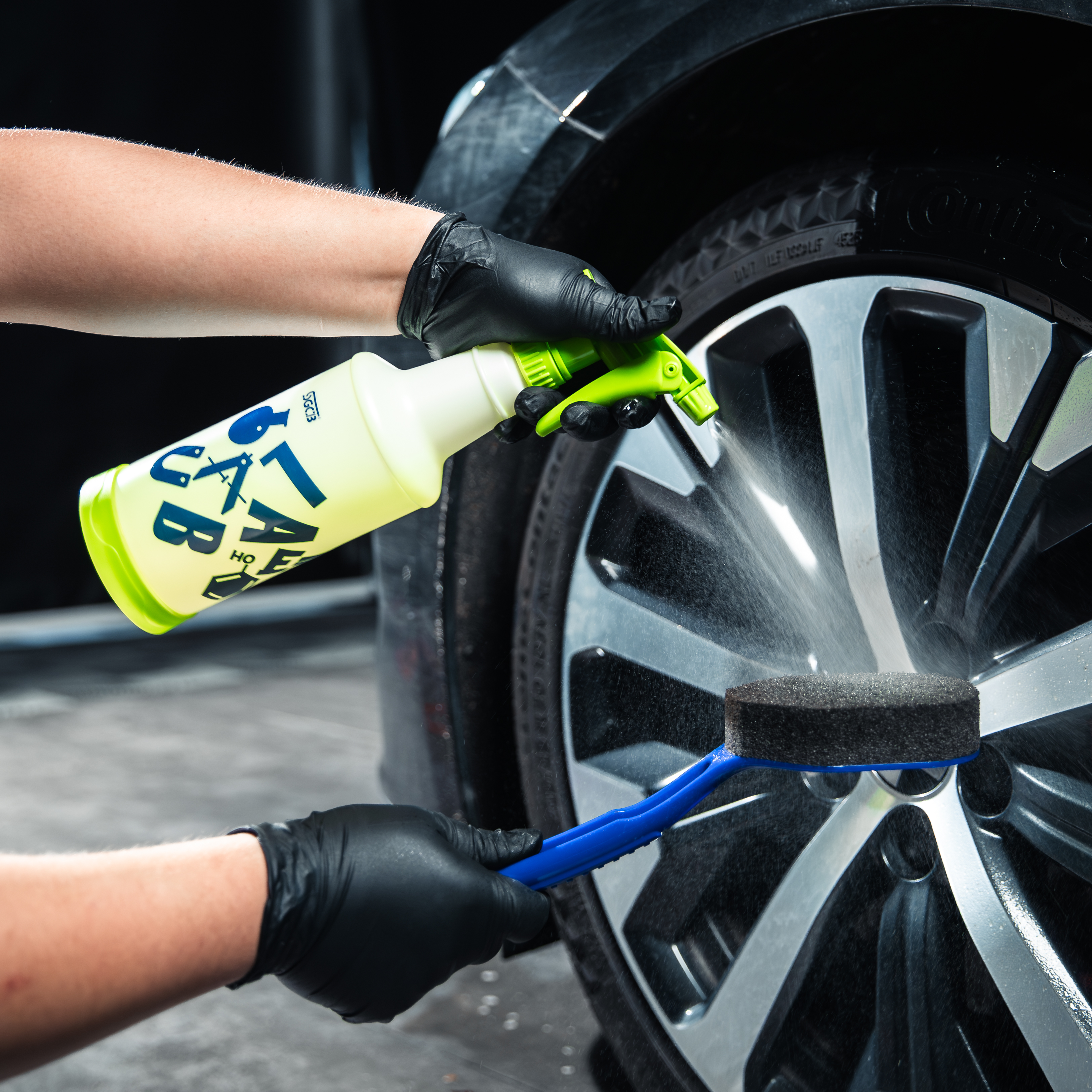
The SGCB Spray Bottle 2.0 Pro is listed under models SGGD418 and SGGD471. The page specifies an 800 ml volume, chemical-resistant property, enhanced water spray and a weighted ring at the base. It also lists multiple colors, including blue, grey, green, yellow, red, purple and black. For a detailing team, those details connect capacity, handling and chemical identification in one operating unit.
100,000-Cycle Test Claim and Its Evidence Limits
The stainless-steel spring and continuous 100,000-press test are relevant to professional use because trigger fatigue can create inconsistent output and operator frustration. The claim should still be verified for the buyer's liquid. A procurement file should preserve the product revision, test conditions, intended chemical, and acceptance criteria. This approach gives the claim useful evidentiary weight without turning it into an unsupported service-life guarantee.
Applications That Require Separate Validation
The product page names automotive detailing, commercial and household cleaning, horticultural maintenance, selected non-highly corrosive reagents, and hair or personal-care products. Those categories are broad. The final decision should be made at the formulation level. A horticultural solution containing a solvent or oxidizer may require a different review from a diluted water-based cleaner, even if the use case sounds similar.
Application Fit in Detailing and Cleaning Operations
Exterior Vehicle Cleaning
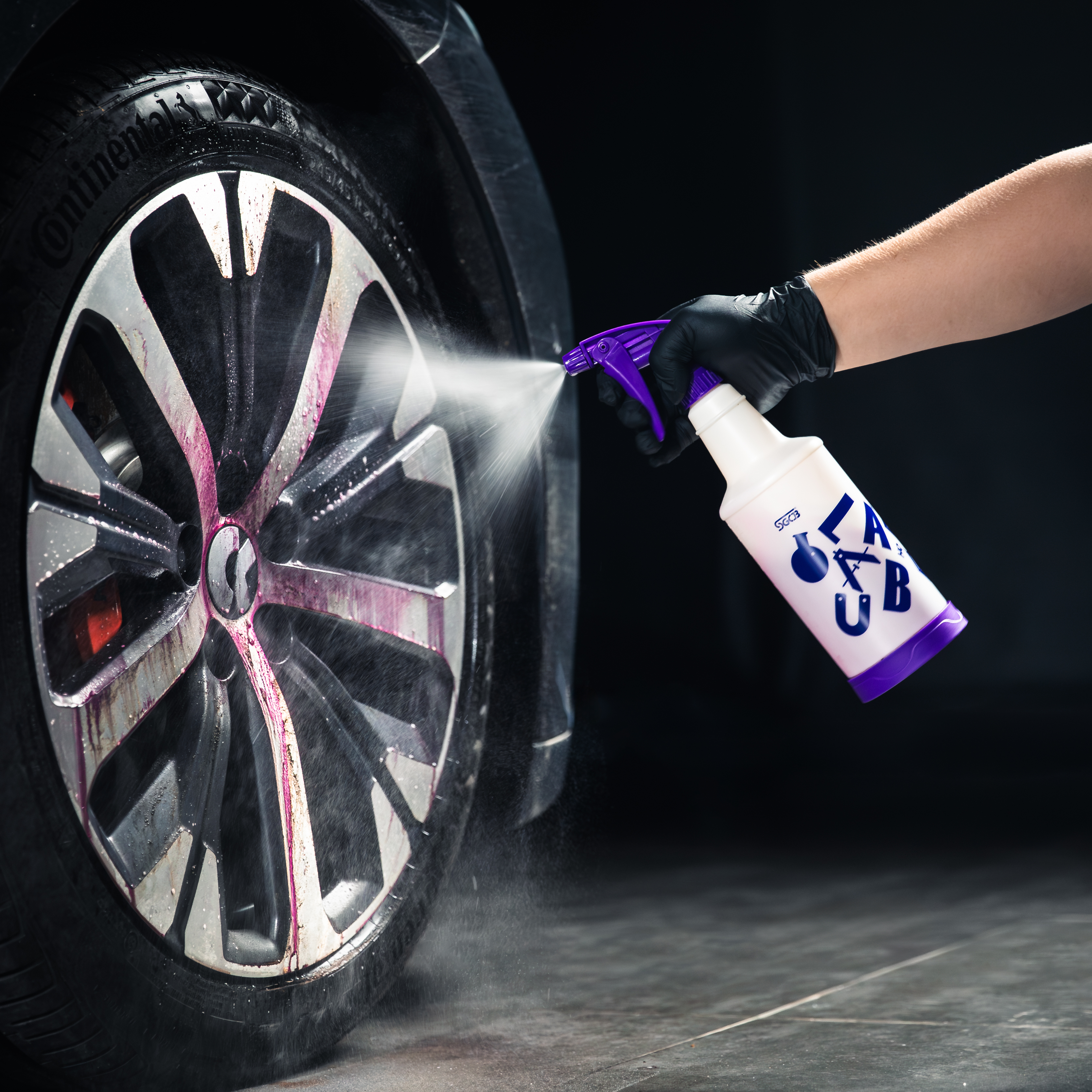
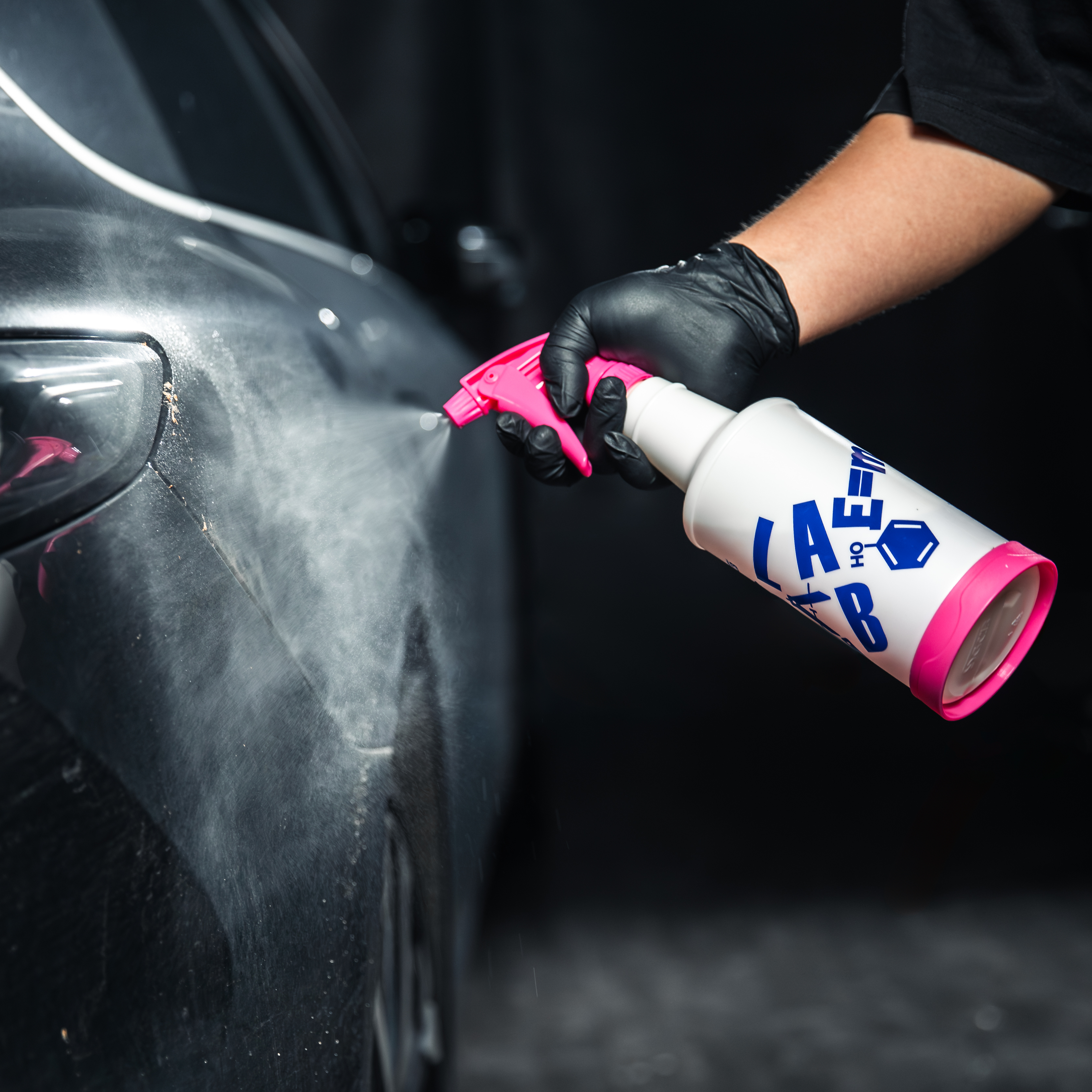
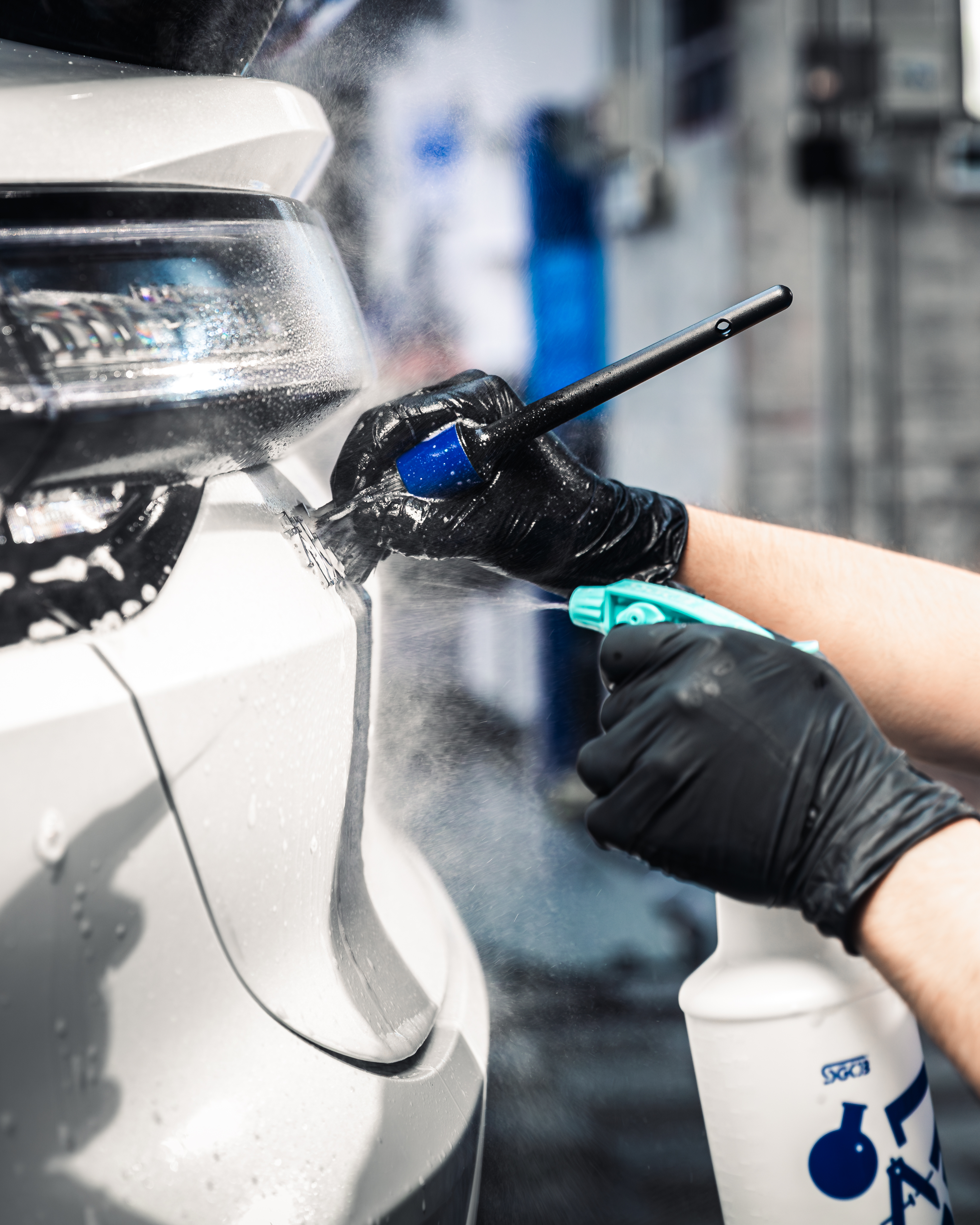
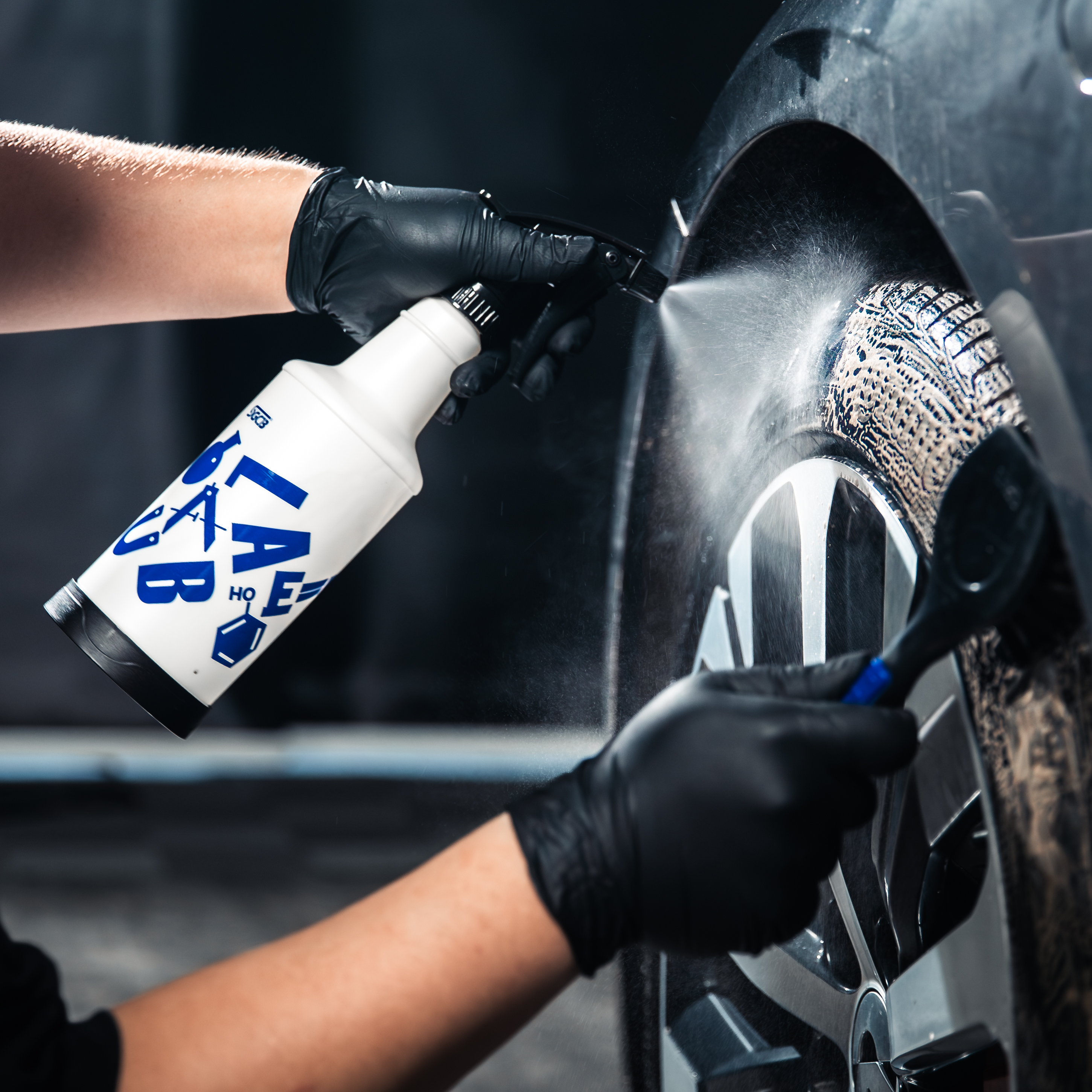
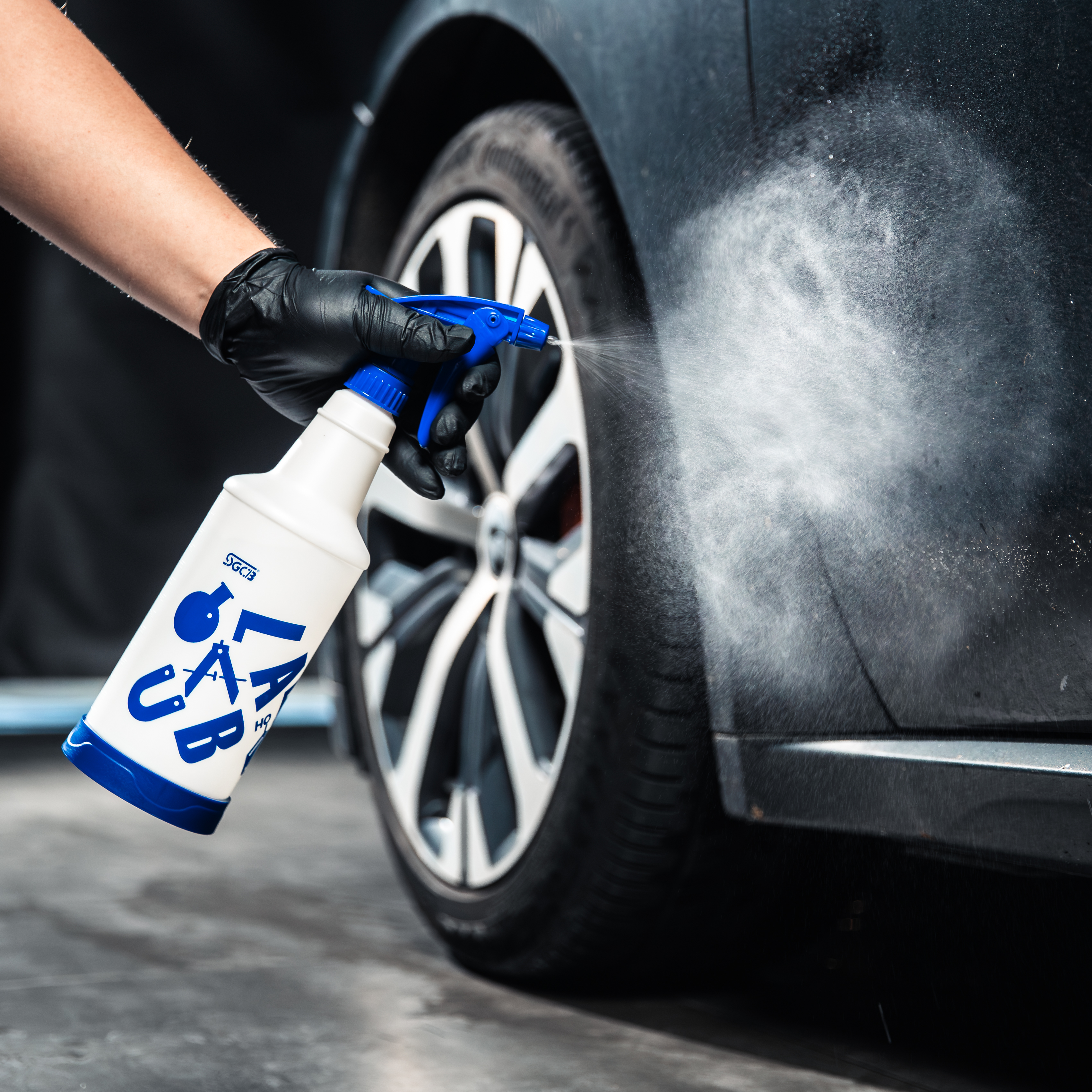
Wheel and tire work often needs controlled placement, chemical identification and fast rinsing. A direct spray can target a heavily soiled area, while a mist can cover a larger panel with less runoff. Color coding can help a team keep wheel chemistry separate from glass or interior products, provided every bottle also carries a durable written label.
Interior and Disinfection Workflows
Interior work rewards a uniform output that limits wetting on screens, switches and textile edges. Operators should confirm the liquid is approved for the surface and that the sprayer is rinsed when changing chemistry. Disinfectants may have contact-time requirements, so the bottle should support the intended application without encouraging over-wetting.
Horticultural and General Cleaning Uses
The same dispensing principles apply to plant-care liquids and household cleaners: identify the formulation, confirm temperature and keep the bottle away from food use. The SGCB instructions explicitly state that the bottle is non-food grade. That clear boundary is important for distributors serving multiple markets.
Buyer Verification Checklist
A Five-Step Sample Approval Process
- Confirm the chemical formulation, dilution ratio and SDS before selecting a sprayer.
- Verify the stated temperature, storage position and expected exposure time.
- Install the trigger on a compatible 28/400 bottle and check the closure without modification.
- Run repeated spray cycles, then inspect output, leakage, spring return and nozzle condition.
- Document the result, limitations and approved chemical list before releasing a bulk order.
This checklist keeps the decision evidence-led. It also creates a repeatable approval record when a detailing chain adds a new chemical, changes dilution or moves from a sample to a multi-site purchase.
The checklist is also useful for service consistency. A supervisor can use the same fields to approve a new product at one site and to audit existing bottles at another. If a trigger begins to mist unevenly, the record helps distinguish a clogged nozzle from chemical attack or a damaged seal. That diagnostic clarity limits unnecessary replacement and gives the supplier a precise description of the failure mode.
Frequently Asked Questions
Q1: What pH range should a chemical-resistant sprayer support?
A: The required range depends on the actual formulation. SGCB states that the Spray Bottle 2.0 Pro supports pH 1-14 liquids, but buyers should validate concentration, additives, temperature and contact time.
Q2: Does pH 1-14 compatibility cover concentrated acids?
A: No. The product instructions exclude strongly corrosive liquids such as concentrated sulfuric and nitric acid. A broad pH statement is not a substitute for a formulation-specific compatibility review.
Q3: Why do trigger sprayers leak after repeated use?
A: Common causes include worn seals, damaged threads, loose closure torque, chemical swelling, a blocked nozzle or a failed valve. Testing should inspect the complete assembly rather than the bottle alone.
Q4: What does a stainless-steel spring change?
A: A stainless-steel spring can improve resistance to rust in wet cleaning workflows. Its practical life still depends on the liquid, cycle rate and the condition of the surrounding seal and valve.
Q5: How should a chemical sprayer be maintained?
A: Rinse the nozzle with clean water after use, check the trigger before operation, and avoid strong impacts or drops. Flush the assembly before changing to a different chemical family.
Q6: Can the bottle be used with flammable liquids?
A: The SGCB instructions advise against flammable liquids. Buyers should follow the chemical label, SDS and local workplace requirements rather than infer suitability from pH.
Q7: Is the SGCB Spray Bottle 2.0 Pro food grade?
A: No. The product page states that it is non-food grade and should not be used for food spraying.
Q8: What should bulk buyers verify before ordering?
A: Verify the exact chemical list, MOQ, color mix, 28/400 fit, packaging, sample approval, inspection criteria and replacement-part plan with the supplier.
Conclusion
Chemical-resistant trigger sprayer selection is a risk-management exercise. The strongest decision combines liquid chemistry, temperature, exposure time, seal design, mechanical cycles and operator workflow. The SGCB Spray Bottle 2.0 Pro provides a useful case because its product page states a pH 1-14 range, 28/400 thread, stainless-steel spring, 800 ml capacity and color options. Those specifications can support professional detailing applications when the actual formulation is tested and the published safety limits are respected.
For purchasing teams, the practical standard is simple: approve the assembly that performs reliably with the intended liquid, under the intended routine, with evidence that can be revisited when the chemistry or operating conditions change.
References
Sources
S1. pH and Water
Link:
https://www.usgs.gov/special-topics/water-science-school/science/ph-and-water
Note: Provides an authoritative explanation of pH and its logarithmic scale.
S2. Hazard Communication
Link:
https://www.osha.gov/hazcom
Note: Explains workplace hazard communication and the role of labels and safety information.
S3. Chemical Classification
Link:
https://www.hse.gov.uk/chemical-classification/
Note: Provides UK guidance on classifying and communicating chemical hazards.
S4. Safer Choice Standard
Link:
https://www.epa.gov/saferchoice/standard
Note: Shows how chemical ingredients and product performance can be assessed together.
S5. Pesticide Label Review Manual
Link:
https://www.epa.gov/pesticide-registration/label-review-manual
Note: Useful reference for label-based handling and application instructions.
Related Examples
R1. SGCB Spray Bottle 2.0 Pro Product Page
Link:
https://sgcbautocare.com/products/spray-bottle-20-pro
Note: Primary source for the model, volume, pH statement, thread, test claim and use limits.
R2. SGCB Sprayers and Triggers Collection
Link:
https://sgcbautocare.com/collections/spray-bottle-sprayer
Note: Shows the wider product category and adjacent sprayer formats.
R3. SGCB About Us
Link:
https://sgcbautocare.com/pages/about-us
Note: Provides company background, product development scope and market context.
R4. Complete Wholesale Sprayer Selection Guide for Car Wash Detailing
Link:
https://sgcbautocare.com/pages/complete-wholesale-sprayer-selection-guide-for-car-wash-detailing
Note: User-required source covering wholesale selection considerations for detailing operations.
Further Reading
F1. How Precision Spraying Can Reduce Waste
Link:
https://www.industrysavant.com/2026/08/how-precision-spraying-can-reduce.html
Note: User-required article linking precision application with operational waste reduction.
F2. Neck Finish Guide
Link:
https://www.berlinpackaging.com/neck-finish-guide/
Note: Explains packaging neck-finish terminology relevant to trigger compatibility.
F3. Packaging Neck Finish Reference
Link:
https://www.oberk.com/packaging-resources/neck-finish
Note: Provides an additional packaging-industry explanation of neck finishes and closures.
This post was reproduced from: https://www.industrysavant.com/2026/09/how-to-choose-chemical-resistant.html


